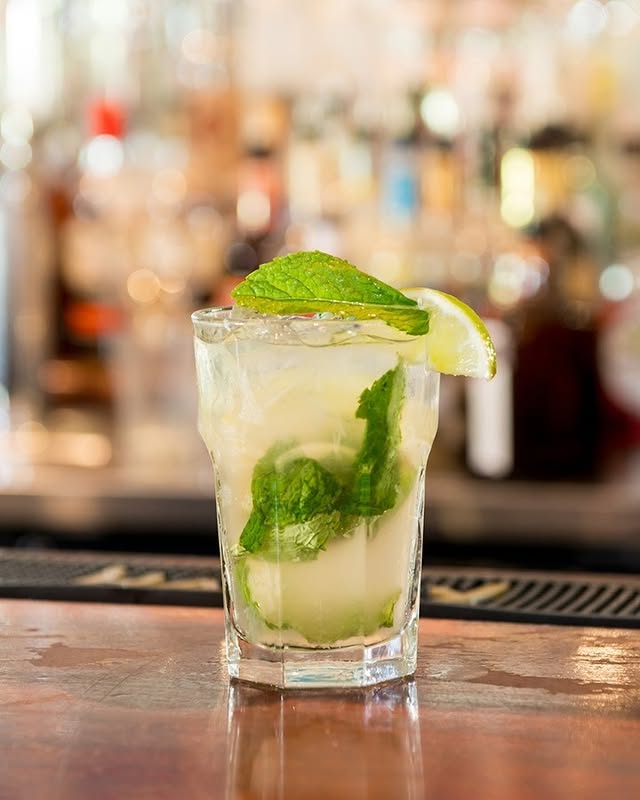
Mojitos in Key West
Freshly muddled with white rum, mint, and lime — the drink that made us famous, served on our Mallory Square patio with live salsa music.
The Meson Mojito
Nothing says Key West like a freshly muddled Cuban Mojito on the outdoor patio as the sun sets over Mallory Square. We craft our cocktails with real Cuban rums, fresh mint, freshly squeezed limes, and natural cane sugar.
Fresh mint, lime juice, simple syrup, white rum, and a splash of club soda. The drink that made us famous — bright, herbal, and endlessly refreshing.
Sunset, Salsa & a Fresh Mojito
Take your drink to our outdoor patio bar and enjoy live music, dancing, and the energy of Mallory Square. The Caribe de Key West band plays nightly, making a freshly muddled mojito the perfect companion to the world-famous Key West Sunset Celebration.
Rum is the spirit of the Caribbean, and its history is deeply intertwined with Cuban culture — the foundation of legendary cocktails like the Mojito, Daiquiri, and Cuba Libre. Explore that history in our History of Bacardi Rum and our Mojitos & Cocktails guide.
Why Sip a Mojito Here
Freshly Muddled
Real Cuban rums, fresh mint, freshly squeezed limes, and natural cane sugar — the drink that made us famous.
Live Salsa Nightly
The Caribe de Key West band plays nightly on our patio, bringing live salsa music to Mallory Square.
At the Sunset
Steps from the world-famous Key West Sunset Celebration at Mallory Square.
Enjoy a Mojito on the Patio
Fresh mint, lime, and rum at Mallory Square — with live salsa nightly.