Cuban American Heritage · Key West
Jose "Pepe" M. Diaz
A life that carried history across water—and turned survival into hospitality.
The Story, Told Carefully
José “Pepe” M. Díaz was born in Yaguajay, Cuba. His early life was shaped by rural community, work, and upheaval. After opposing the Cuban regime and enduring years of forced labor, he left the island and learned his craft in the mesones of Spain—where cooking was not only sustenance, but culture, discipline, and refuge.
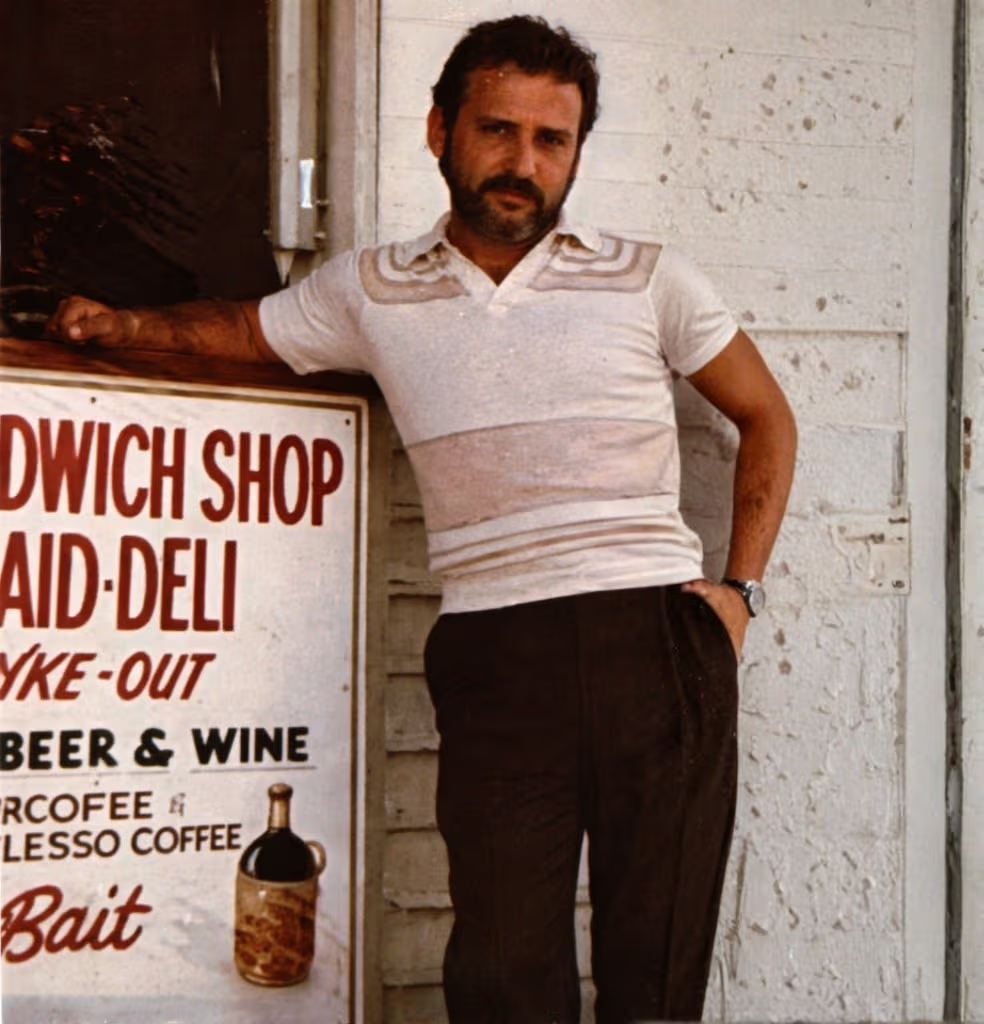
In 1973, Pepe arrived in Miami and soon after made his way to Key West. The Díaz family became Conch the way Conchs always have: by working, serving, and staying. Through the Cuban Club, Tony's Grocery, and a modest deli counter where regulars gathered for Cuban coffee and sandwiches, the foundation was laid. Those years were not incidental. They were preparation.
In 1986, El Mesón de Pepe opened on Duval Street—small, family-run, and built on persistence. After a fire nearly ended it, the restaurant reopened the same year through sheer tenacity and community support. In 1997, El Mesón moved to Mallory Square, where it remains today: a permanent home for Cuban American heritage in Key West.
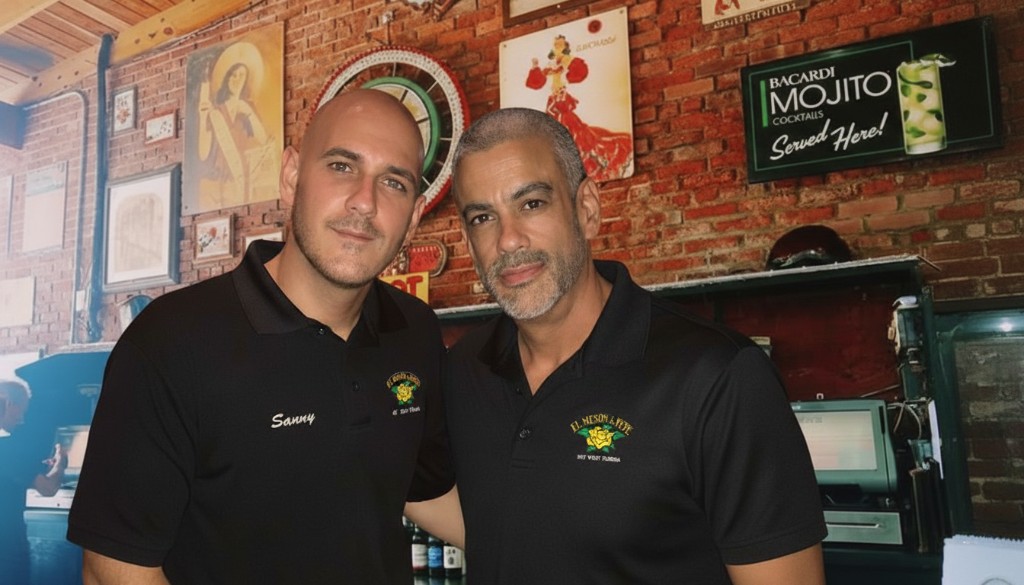
For nearly four decades, the table has carried that purpose. Cuisine as cultural expression. Music, mojitos, recipes passed hand to hand—not preserved as nostalgia, but practiced as living tradition. We carry the weight of that history deliberately. We do not reference it. We live it.
Exhibit labels
Themes
Survival as craft
In confinement, scarce staples became meals for others. Craft born of necessity became the foundation of a lifetime of hospitality.
Food as memory
Recipes carried across water. Each dish a thread between Cuba and Key West—culture preserved at the table.
Key West as home
Cayo Hueso welcomed him. Here he built not only a restaurant but a place where Cuban American Conch identity could endure.
Cuban American Conch legacy
He did not simply open a business. He helped turn Cuban tradition into Conch permanence—history made visible at Mallory Square.
Hospitality as inheritance
The table as offering. What began in confinement as care for others became El Mesón de Pepe: a living museum of that inheritance.
Timeline
Pepe → El Mesón de Pepe
1941
Origins
January 24, 1941: Pepe is born in Yaguajay, Cuba, the son of Sergio Díaz and Hortensia Marrero. He grows up with his sisters Sofía and Marta in a rural, close-knit community.
Late 1950s
Youth and Political Involvement
As a teenager, Pepe joins the early uprisings against Batista, aligned with Camilo Cienfuegos.
1959–1960s
Opposition and Labor Camps
After the Cuban Revolution, Pepe becomes one of the early opponents of the new regime. He is sent to Cuban labor camps for about three years. While imprisoned, he begins cooking—preferable to forced agricultural labor—marking the start of his culinary path.
Late 1960s–Early 1970s
Leaving Cuba via Spain
With no direct visas to the U.S., Pepe leaves Cuba through Spain. He works in Spanish restaurants and mesones, refining his skills. The idea is born: when he reaches the U.S., he will open his own Spanish-style "Mesón."
1973
Arrival in Miami
Pepe arrives in Miami. He works at a well-known restaurant ("La Esquina de Tejas"), cooks for Ronald Reagan, meets Kachi (Tania), and they begin their family.
Mid-1970s–1980s
From Grocery Store to Deli
The family opens a grocery store, living upstairs. Children help from a young age. The grocery evolves into a small deli, serving sandwiches through a take-out window.
1980s
The Dish That Funded the Dream
Pepe creates "el bolito": yellow rice, black beans, ground beef, fried sweet plantain, and bread. This affordable, filling meal becomes a big seller and helps finance the future restaurant.
1986
First El Mesón Opens
The family purchases Papa's Place and opens the first El Mesón at 1215 Duval Street, Key West (previously a laundromat). Entirely family-run: Pepe cooks, Kachi works the front, children help however needed.
1987
Fire and Rebirth
The restaurant burns down on July 4th. The entire family works together to rebuild.
Late 1987
Reopening for Fantasy Fest
The restaurant reopens within the same year, just in time for Fantasy Fest. Pepe's persistence convinces a city inspector to grant permission to open. The community strongly supports them.
1994
Building a Long-Term Team
David Robleto (chef) and Laura Robleto (cook) join. The menu, quality, and family spirit remain the same. The transition from small family business to stable, professional operation.
1997
Major Expansion
The restaurant expands to Mallory Square, 410 Wall Street. More seating, larger space, stronger retail component.
1998
Big Pine and Hurricane Georges
Pepe buys property in Big Pine Key. Hurricane Georges (1998) strikes shortly after.
2017
20 Years and Community Service
The family celebrates 20 years at the Wall Street location. After a major hurricane, the restaurant stays open, serving hundreds of free meals to the community. El Mesón de Pepe's role as a community anchor is reinforced.
Present
Legacy Continues
Pepe is partially retired, helping his daughter open a restaurant in Tampa. Many staff have been with the restaurant for decades. The lease with the city has been extended for another 10 years, securing the future.
A Living Museum
El Mesón de Pepe preserves Cuban American heritage through food, story, and community memory. The restaurant is also a museum: it honors notable Key West Cubans and Cuban American Conch history, ensuring that the contributions and identity forged here remain visible and permanent.
Pepe's life—from Yaguajay to Key West, from survival to hospitality—is integral to that mission. The table carries it forward.